
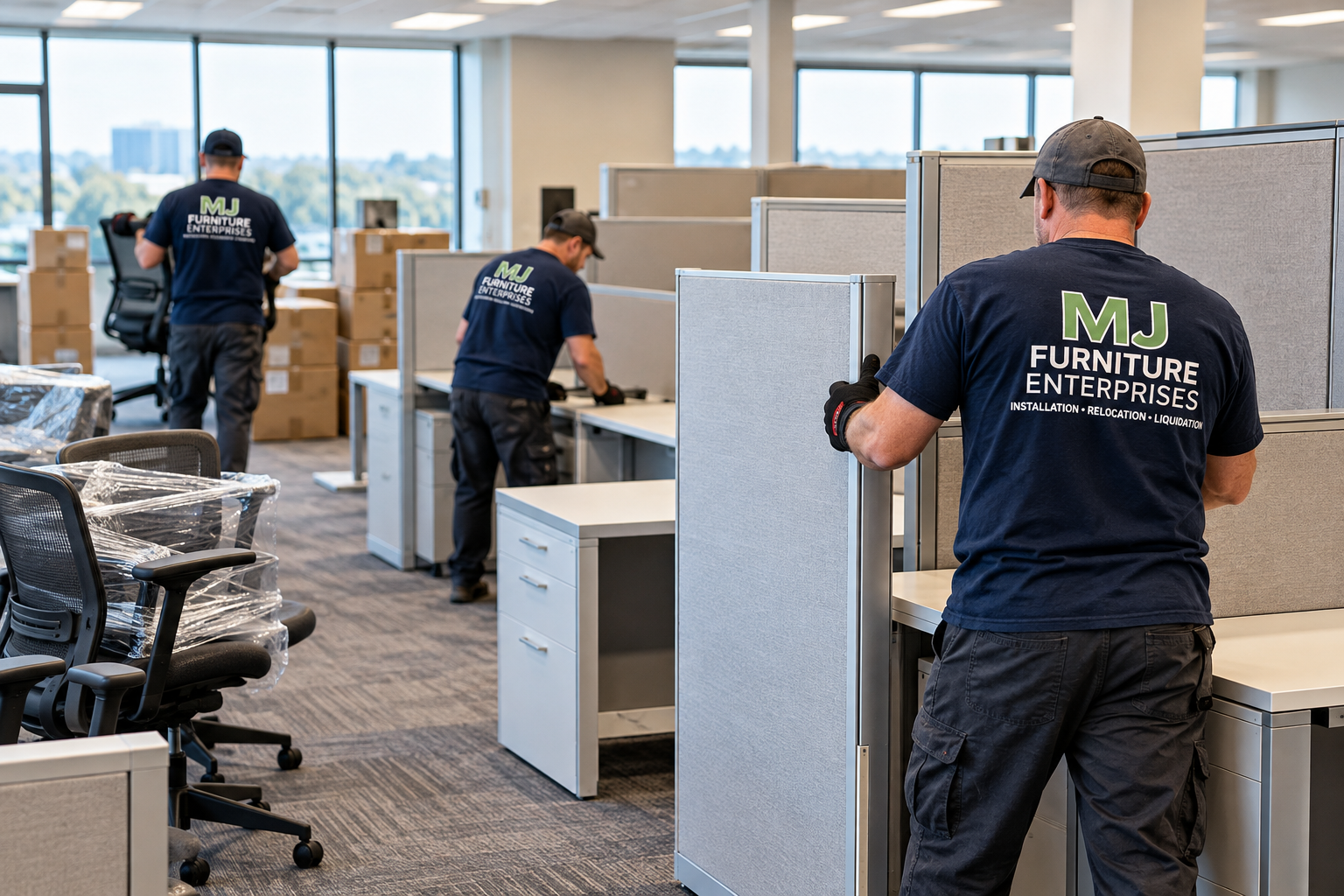
Moving an office is a major undertaking for any business. Whether you’re relocating a small team or an entire corporate workspace, an office move requires careful planning, organization, and coordination to keep your business running smoothly.
From dismantling office cubicles and preparing workstations for transportation to coordinating furniture delivery and reinstallation, even a relatively small office relocation can involve numerous moving parts.
Without a clear plan, businesses may face unexpected expenses, damaged furniture, installation delays, and unnecessary disruptions to daily operations.
Fortunately, proper preparation and experienced office furniture professionals can make the process significantly easier.
At MJ Furniture Enterprises, based in Newton, New Hampshire, we help businesses throughout New Hampshire and Massachusetts with commercial office furniture relocation, cubicle dismantling, furniture transportation, and professional reinstallation.
Whether you’re moving into a larger facility, downsizing your workspace, or reorganizing an existing office, understanding the relocation process can help you save time, control costs, and minimize interruptions.
In this guide, we’ll walk through the essential steps for planning an office move, explain common challenges businesses should prepare for, and share practical tips for getting your new workspace ready for employees.
When Should You Start Planning an Office Move?
One of the biggest mistakes businesses make when relocating is waiting too long to begin planning. Moving an office involves much more than transporting desks and chairs from one building to another.
Depending on the size of your business, the amount of office furniture involved, and the complexity of your new workspace, planning may need to begin several months before your intended moving date.
For many small and medium-sized businesses, starting the office relocation planning process approximately three to six months in advance can provide valuable time to coordinate logistics, evaluate furniture requirements, and prepare employees for the transition.
Larger offices or businesses with extensive cubicle systems may require additional preparation.
Three to Six Months Before Your Office Move
During the early planning stages, businesses should focus on organizing the overall relocation process.
Important tasks include:
- Establishing a realistic moving budget.
- Confirming the new office location and anticipated move-in date.
- Measuring the new workspace and evaluating furniture layouts.
- Identifying which desks, cubicles, chairs, and storage units will be relocated.
- Determining which furniture should be replaced, liquidated, or removed.
- Contacting office furniture relocation and installation professionals.
Planning early can also help identify potential challenges, such as whether existing cubicles will fit into the new office layout.
One to Two Months Before Your Office Move
As the moving date approaches, attention should shift toward finalizing logistics and preparing the workplace.
Businesses should:
- Confirm moving arrangements and furniture installation schedules.
- Finalize workstation assignments and the new office floor plan.
- Coordinate elevator access, loading docks, and building requirements.
- Arrange for IT equipment disconnection and reconnection.
- Organize important documents and office supplies.
- Communicate the relocation schedule to employees.
One to Two Weeks Before Your Office Move
The final weeks should focus on ensuring everything is ready for moving day.
Key preparations include:
- Labeling furniture and workstation components.
- Confirming transportation and installation arrangements.
- Backing up important business data.
- Preparing employees for temporary workspace changes.
- Verifying access to the new building.
- Reviewing the moving schedule with everyone involved.
A well-organized timeline helps reduce last-minute surprises and allows businesses to coordinate furniture relocation with other important moving activities.
At MJ Furniture Enterprises, we understand that office furniture relocation requires careful coordination. Our team helps businesses manage furniture dismantling, transportation, and reinstallation so their new workspace can be prepared for employees as efficiently as possible.
How to Prepare Office Cubicles and Furniture for Moving
Office furniture relocation requires more preparation than simply loading desks and chairs onto a truck. Commercial cubicle systems, modular workstations, conference tables, and storage units often need to be carefully dismantled, organized, and transported to prevent damage.
Proper preparation can help businesses avoid lost components, damaged furniture, and unnecessary installation delays.
1. Inventory Your Existing Office Furniture
Before moving day, create an inventory of the furniture currently in your office.
Include items such as:
- Office cubicles and modular workstations
- Desks and conference tables
- Office chairs
- Filing cabinets and storage units
- Bookshelves and other office furnishings
Determine which items will be relocated, replaced, donated, or removed.
This is also a good opportunity to identify furniture that may no longer meet your company’s needs.
2. Evaluate Your Existing Cubicle Systems
Not every cubicle configuration will fit into a new office layout.
Before dismantling workstations, verify the dimensions of your existing cubicles and compare them with the available space at your new location.
Consider panel heights, work surface dimensions, storage components, and the number of employee workstations required.
Some modular cubicle systems can be reconfigured, but changes may require compatible panels, connectors, or additional components.
3. Plan for Professional Cubicle Dismantling
Commercial office cubicles often contain interconnected panels, work surfaces, brackets, and storage components that require careful disassembly.
Attempting to dismantle these systems without the appropriate experience can result in damaged components or missing hardware.
Professional office furniture installers can help disassemble workstations systematically while keeping components organized for transportation and reinstallation.
Any electrical or data connections should be safely disconnected by appropriately qualified personnel before dismantling begins.
4. Label and Organize Furniture Components
A clear labeling system can make reinstallation much easier.
Furniture components should be identified according to their intended location in the new office. Hardware, brackets, and connectors should be grouped and secured to prevent loss during transportation.
For larger offices, a workstation numbering system can help keep furniture organized throughout the relocation.
5. Coordinate Transportation and Reinstallation
Before moving day, confirm how furniture will be transported and where each workstation should be installed at the new location.
Make sure the new office is ready to receive furniture, with clear access routes and an approved floor plan.
At MJ Furniture Enterprises, we assist businesses throughout New Hampshire and Massachusetts with office furniture dismantling, relocation, and professional reinstallation.
Our goal is to help businesses transition their existing furniture into a functional new workspace while minimizing unnecessary delays and disruptions.
Common Office Moving Mistakes and How to Avoid Them
Even a well-planned office relocation can encounter unexpected challenges. From furniture that doesn’t fit the new workspace to scheduling conflicts and missing workstation components, small oversights can lead to costly delays.
Understanding common office moving mistakes can help businesses prepare for a smoother transition.
1. Failing to Measure the New Office
One of the most common relocation mistakes is assuming existing office furniture will fit into the new location without modifications.
Cubicle systems, conference tables, and storage cabinets may require different configurations depending on the available floor space.
How to avoid it: Measure the new office, verify furniture dimensions, and develop a workstation layout before scheduling installation.
2. Underestimating the Time Required for Furniture Installation
Commercial office furniture often requires more assembly than traditional household furniture.
Modular cubicle systems may include numerous panels, work surfaces, connectors, and storage components that must be assembled correctly.
How to avoid it: Schedule adequate time for furniture dismantling, transportation, and reinstallation. Coordinate these activities with other contractors working in the new office.
3. Moving Furniture That Is No Longer Needed
Relocating outdated, damaged, or unnecessary furniture can increase transportation costs and create clutter in the new workspace.
How to avoid it: Review your existing furniture inventory before the move and identify items that should be reused, replaced, or removed.
Businesses with unwanted office furniture may benefit from professional office furniture liquidation and removal services.
4. Poor Communication Between Moving Teams
Office relocations often involve building management, IT professionals, moving companies, furniture installers, and employees.
Without clear communication, scheduling conflicts can delay the entire project.
How to avoid it: Assign a primary relocation coordinator and establish a clear timeline outlining each team’s responsibilities.
5. Forgetting About Building Access and Requirements
Some commercial buildings have specific requirements for deliveries, elevator reservations, loading docks, insurance documentation, and contractor access.
How to avoid it: Confirm building policies at both locations before moving day and communicate any restrictions to your relocation team.
6. Waiting Until the Last Minute to Hire Furniture Professionals
Office furniture dismantling and installation can require specialized tools, experience, and scheduling.
Waiting too long to arrange these services may limit availability or create unnecessary pressure as the moving date approaches.
How to avoid it: Contact experienced office furniture professionals early in the planning process.
At MJ Furniture Enterprises, we work with businesses throughout New Hampshire and Massachusetts to help coordinate office furniture dismantling, relocation, and reinstallation.
Planning ahead and working with experienced professionals can make the difference between a stressful office move and a more organized transition.
Frequently Asked Questions About Office Relocation
How far in advance should a business plan an office move?
Many businesses benefit from beginning their office relocation planning approximately three to six months before their anticipated moving date. Larger offices or relocations involving extensive cubicle systems may require additional preparation.
Can office cubicles be dismantled and moved to another location?
Yes. Many commercial office cubicle systems are designed to be dismantled, transported, and reinstalled. However, the ability to reuse or reconfigure existing cubicles depends on their condition, manufacturer, and the availability of compatible components.
How long does it take to relocate office furniture?
The timeline depends on the number of workstations, furniture complexity, building access, transportation distance, and installation requirements. A small office may require considerably less time than a large workspace containing dozens of cubicles.
Should businesses replace their office furniture when relocating?
Not necessarily. If existing desks, cubicles, and storage units are in good condition and fit the new workspace, relocating them may be more cost-effective than purchasing replacements. However, an office move can also be a good opportunity to upgrade outdated furniture or adjust workstation configurations.
What happens to office furniture that won’t fit in the new location?
Businesses can explore options such as furniture liquidation, removal, donation, or disposal, depending on the condition and quantity of the items.
MJ Furniture Enterprises provides office furniture liquidation and removal services for businesses looking to clear out unwanted workstations, desks, chairs, and other commercial furnishings.
Does MJ Furniture Enterprises help with office furniture relocation?
Yes. MJ Furniture Enterprises assists businesses throughout New Hampshire and Massachusetts with commercial office furniture dismantling, relocation, and reinstallation.
Whether you’re moving existing cubicles or preparing a new office with used or refurbished furniture, our team can help you explore solutions for your project.
Planning an Office Move in New Hampshire or Massachusetts?
Relocating your business doesn’t have to mean replacing all your office furniture or managing complicated workstation installations on your own.
At MJ Furniture Enterprises, we help businesses throughout New Hampshire and Massachusetts with office furniture relocation, cubicle dismantling, furniture installation, and removal of unwanted office furnishings.
Whether you’re relocating a small office, downsizing your workspace, or preparing a larger commercial facility, we’re ready to discuss your furniture requirements and help you plan the next steps.
Ready to get started?
Contact MJ Furniture Enterprises today to discuss your upcoming office move and request a quote for your furniture relocation or installation project.
